Bihar unlocks ₹21,000 crore mineral potential with new resource discoveries
By Staff Report September 30, 2026 6:03 pm IST
Geological investigations across Rohtas, Jamui, Gaya and Jehanabad have identified glauconite, limestone, magnetite, gold and other critical minerals, with commercial extraction targeted over the coming years.
Bihar has identified mineral resources estimated at more than ₹21,000 crore through geological investigations conducted between 2021 and 2024. The discoveries span Rohtas, Jamui, Gaya and Jehanabad and include glauconite, limestone, magnetite, gold, vanadium-bearing magnetite, ilmenite, rare earth elements and lithium-bearing pegmatites.
According to state officials, operationalising the identified resources could generate more than ₹5,000 crore in annual mining revenue. Bihar’s current record mining collection stands at ₹3,592 crore and is largely derived from minor minerals such as sand and stone.
Rohtas accounts for a significant portion of the identified mineral potential. Geological surveys found around 130.11 million tonnes of glauconite across the Pipradih-Bhurwa and Chutia-Nauhatta blocks, with an estimated value of ₹14,048 crore. Glauconite is a source of potassium used in fertiliser production.
The Bhora-Kathra block in Rohtas has also been identified with 33–39.68 million tonnes of high-grade limestone, valued at around ₹1,761.42 crore. The mineral is used in cement manufacturing and quicklime production. Rohtas also has the Amjhor pyrite deposits, which account for nearly 95% of India’s known pyrite deposits.
Jamui has emerged as another important mineral zone, with magnetite identified in the Majos and Bhanta blocks. The Majos block has an estimated 48.40 million tonnes of magnetite, valued between ₹3,817.60 crore and ₹6,000 crore, while the Bhanta block has 6.49 million tonnes valued at around ₹511.91 crore.
Gold-bearing resources have also been identified in the Sono area of Jamui. Exploration has identified 222.88 million tonnes of gold-bearing ore containing an estimated 37.6 tonnes of gold metal. The resource is classified as a remaining resource rather than a reserve, with trial production targeted for 2027–28.
Exploration in Gaya and Jehanabad has identified vanadium-bearing magnetite, ilmenite, rare earth elements and lithium-bearing pegmatites. These minerals have applications in high-strength steel, energy storage, electric vehicle batteries, wind turbines, defence equipment and other advanced industries.
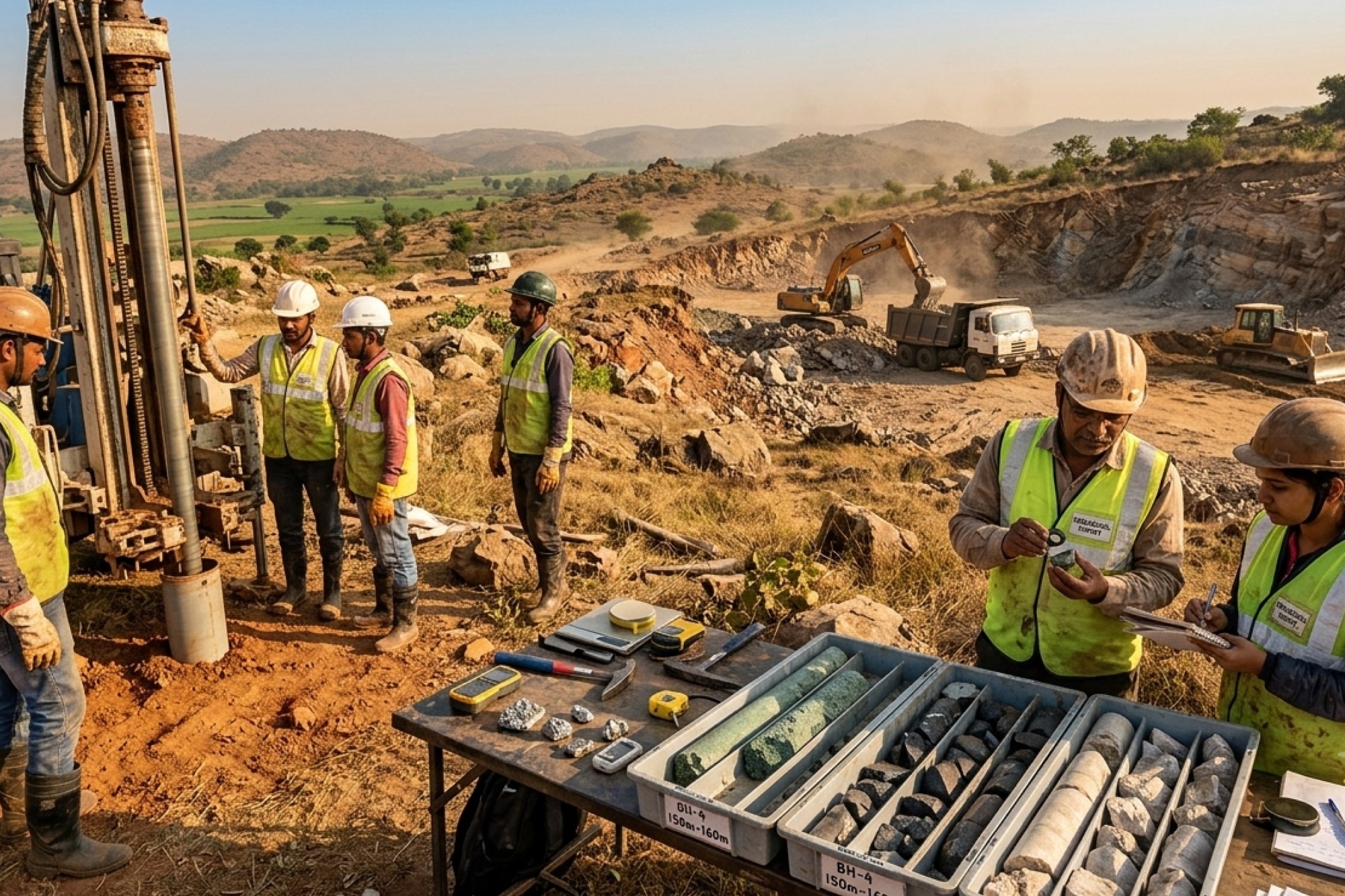
The ₹21,000 crore estimate is based on geological assessments that take factors such as extraction costs, beneficiation and logistics into account. The Geological Survey of India follows four broad stages of exploration — G4 reconnaissance, G3 preliminary exploration, G2 general exploration and G1 detailed exploration.
Bihar has been working to move the identified resources towards commercial extraction through mineral block auctions, further exploration and administrative reforms. The state has targeted advanced G2 and G1 drilling during 2026–27, trial production from the Sono gold resource in 2027–28 and broader commercial mineral extraction between 2026 and 2031.
The Centre has also said it will support Bihar in the scientific and technology-driven utilisation of its mineral resources. A recent high-level meeting in Patna reviewed mineral exploration, development of mineral blocks, e-auctions and production and dispatch, with officials also discussing technologies such as underground coal gasification for Bihar’s coal resources.
However, moving from geological discoveries to operating mines remains a challenge. Early auctions for some glauconite and nickel blocks reportedly faced limited participation, while processing technologies, land acquisition and statutory environmental approvals could affect the pace of commercial development.
Source: Indian Express