India advances deep-sea mining technology amid concerns over marine biodiversity
By Staff Report 1 November 6, 2026 2:55 pm IST
India is developing deep-sea mining technologies and exploration capabilities to access critical minerals, despite calls by 46 countries for a precautionary pause on mining.
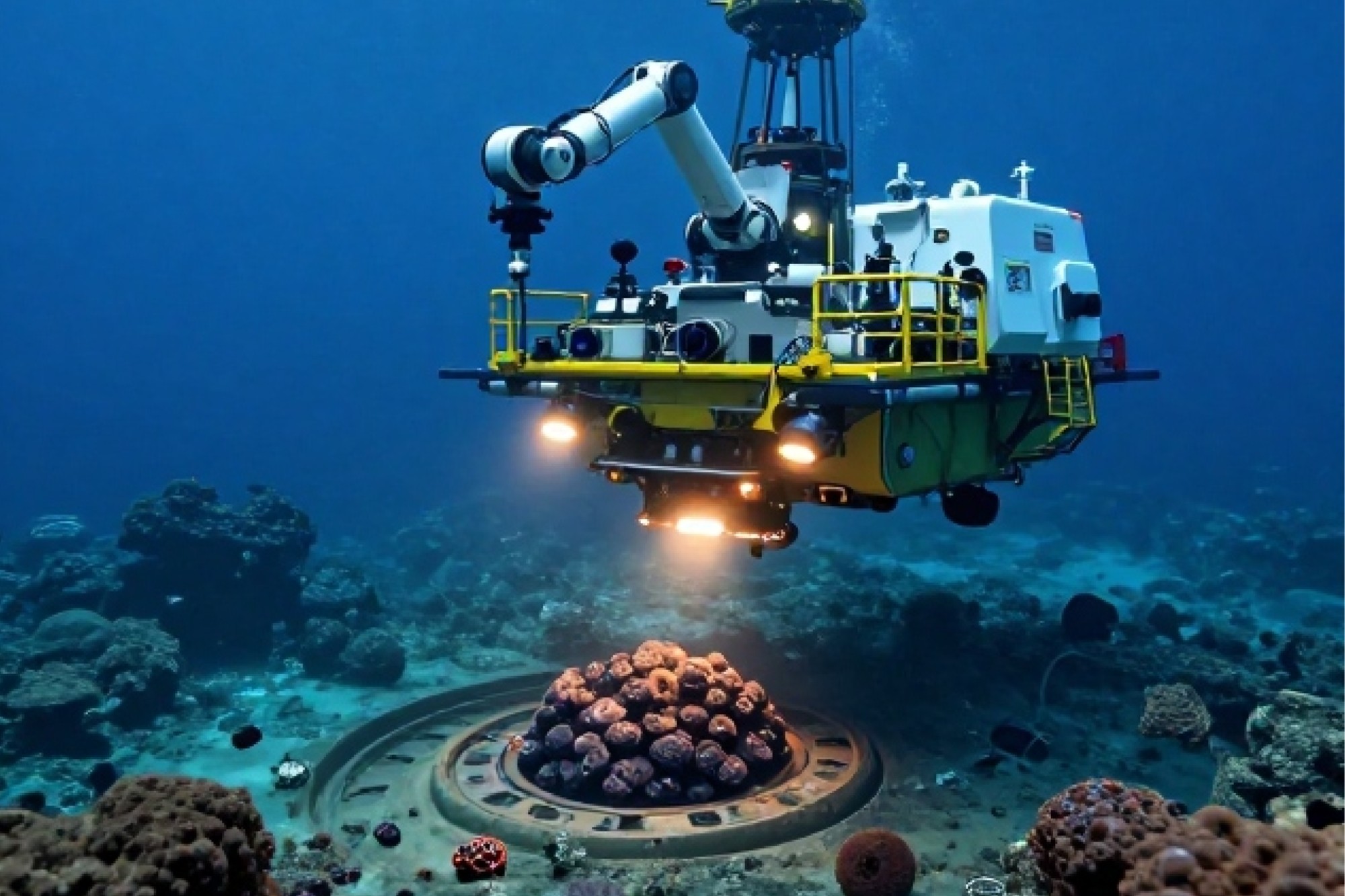
India is strengthening its deep-sea mining capabilities by developing underwater equipment and expanding exploration of seabed mineral resources, even as concerns grow over the potential environmental impact of commercial mining. At the National Institute of Ocean Technology (NIOT) in Chennai, scientists are developing equipment designed to operate at depths of five to six kilometres. The technologies include a remotely operated submarine, a seabed soil tester and a slurry pump.
The work is aimed at building the technical expertise and equipment required to explore and potentially extract critical minerals from the ocean floor. Government officials say India has made progress following a series of successful deep-water equipment tests in recent years.
Expanding international exploration
India has signed two exploration contracts with the International Seabed Authority (ISA) for polymetallic sulphides, which contain minerals such as copper and zinc. It also holds an exploration contract for polymetallic nodules in the Central Indian Ocean Basin.
India, China and South Korea are the only countries with three ISA exploration contracts directly under government control, according to the report. India’s nodules exploration contract covers an area of 75,000 sq km in the Central Indian Ocean Basin. The region is estimated by the Indian government to contain hundreds of millions of tonnes of polymetallic nodules. Recent surveys have also identified potential locations in the polymetallic sulphide exploration areas.
The development of these capabilities is taking place amid growing international opposition to deep-sea mining. A coalition of 46 countries is calling for a moratorium until sufficient scientific evidence is available to establish that environmental impacts can be reduced. At its July meeting in Jamaica, the ISA continued negotiations on regulations for commercial deep-sea mining but did not adopt the Mining Code. Further work is required to resolve outstanding issues before a regulatory framework can be finalised.
Commercial mining remains distant
Despite progress in exploration and equipment development, India is still at an early stage of deep-sea mining. Government officials and experts say commercial operations remain some distance away.
The Ministry of Earth Sciences has noted that further work is needed to convert identified resources into reserves. Ocean governance expert Pradeep Singh also pointed to challenges involving sustained extraction technology, shipboard processing, trans-shipment and onshore refining. The government’s longer-term objectives include mineral resource security, indigenous technology development, scientific capability and industrial readiness.
Environmental concerns
The potential impact on marine ecosystems remains a major concern. Research by government environmental scientist Rengaiyan Periasamy and his team on Indian Ocean ridges has resulted in the discovery of more than 10 new species.
Scientists and environmental groups have warned that deep-sea mining could cause habitat destruction, sediment plumes and disruption of marine ecosystem processes. These impacts could affect biodiversity and fisheries, while the full environmental consequences remain insufficiently understood.
Source: Climate Home News