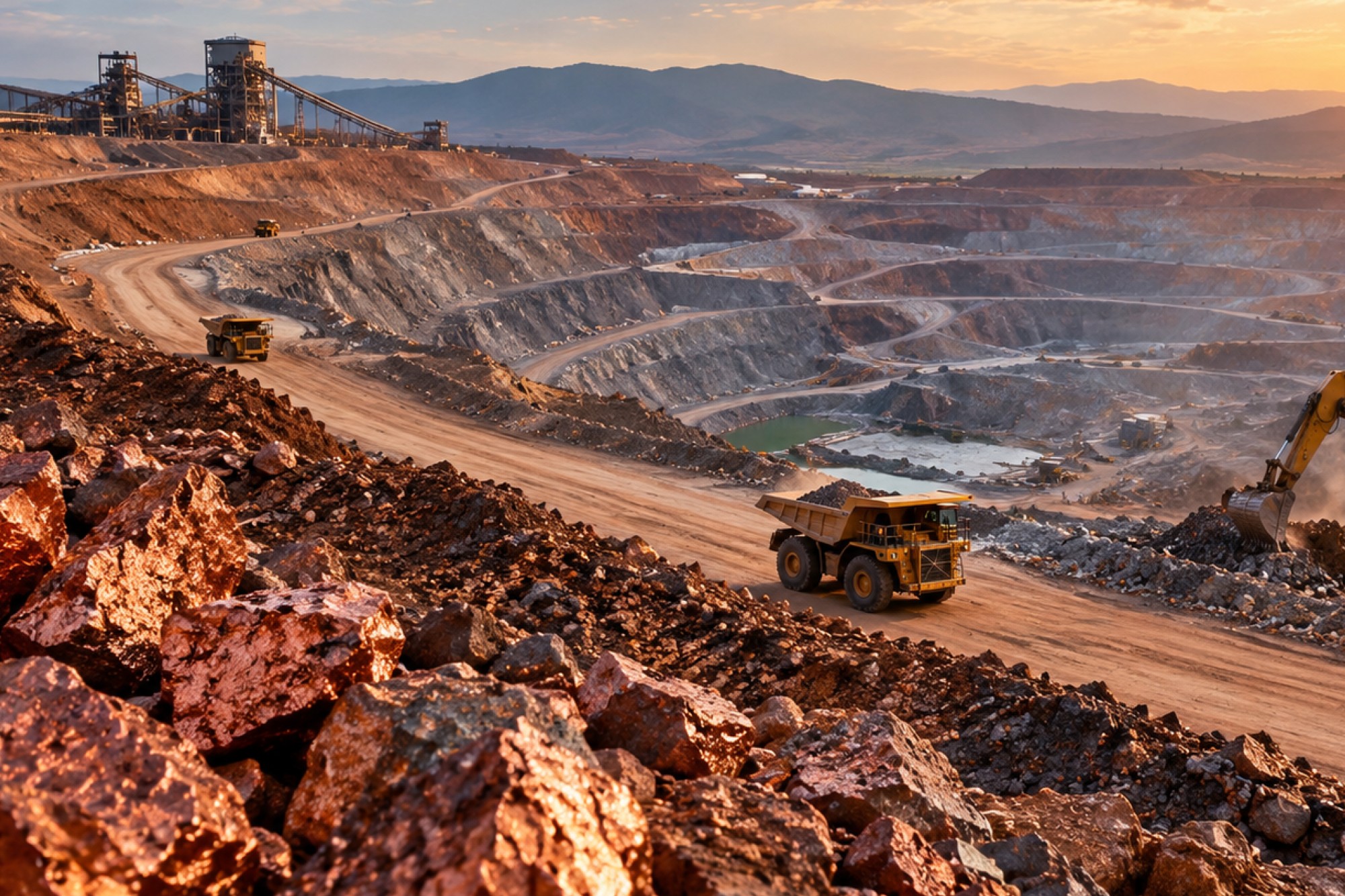
Copper mine development delays raise concerns over future global supply
By Staff Report 1 October 21, 2026 12:38 pm IST
Goldman Sachs warns that declining discoveries, lower ore grades and rising development costs could constrain global copper supply, as new mines take over 16 years to begin production.
Global copper supply faces a structural constraint as declining discoveries, falling ore grades and rising development costs make new mines increasingly difficult to develop, according to Goldman Sachs Research.
The median copper mine now takes more than 16 years from discovery to first production. With output from existing mines expected to begin declining from 2030, higher prices alone may not generate significant additional supply within a typical investment horizon, the report said.
Goldman Sachs described copper’s supply constraint as structural rather than cyclical, suggesting that market prices may need to adjust to reflect the difficulty of bringing new production online. Established producers and projects capable of expanding output could consequently attract greater investor value.
Rising costs add to development challenges
Major copper discoveries have declined since the 1990s, while ore grades have fallen, particularly in South America. New projects are increasingly located in remote areas, adding to construction, operating and capital costs.
Goldman Sachs estimates that average capital intensity rises by around 50% between the pre-feasibility stage and the start of production, increasing from US$10,600 per tonne to US$15,900 per tonne. Its estimated capital costs for projects covered in the report are also 25–90% higher than those outlined in company studies.
The report noted that higher copper prices today cannot deliver new supplies within the next several years, with current investment decisions potentially influencing production levels in the 2040s.
Expansion projects could add future capacity
Goldman Sachs assessed a group of copper growth projects that could collectively add around US$20 billion in net asset value and approximately one million tonnes per annum of additional production by late 2035.
Its assessment used a risk-adjusted valuation framework that considered each project’s development stage, potential cost increases, delays and the conversion of resources into reserves. Earlier-stage projects received larger valuation discounts because their costs, timelines and recoverable reserves remain less certain.
The report said the difficulty of developing new mines could increase the value of established copper producers and credible expansion projects. However, the timing and scale of additional output will depend on project execution, investment decisions and the management of rising development costs.
Source: The Economic Times